
Cookies & Your Privacy
This website uses cookies to ensure you get the best experience on our website. More Information >
Home » Learning & Resources » Case Studies » FILLFOAM™ USED FOR LARGE-SCALE CONDOMINIUM BACKFILL
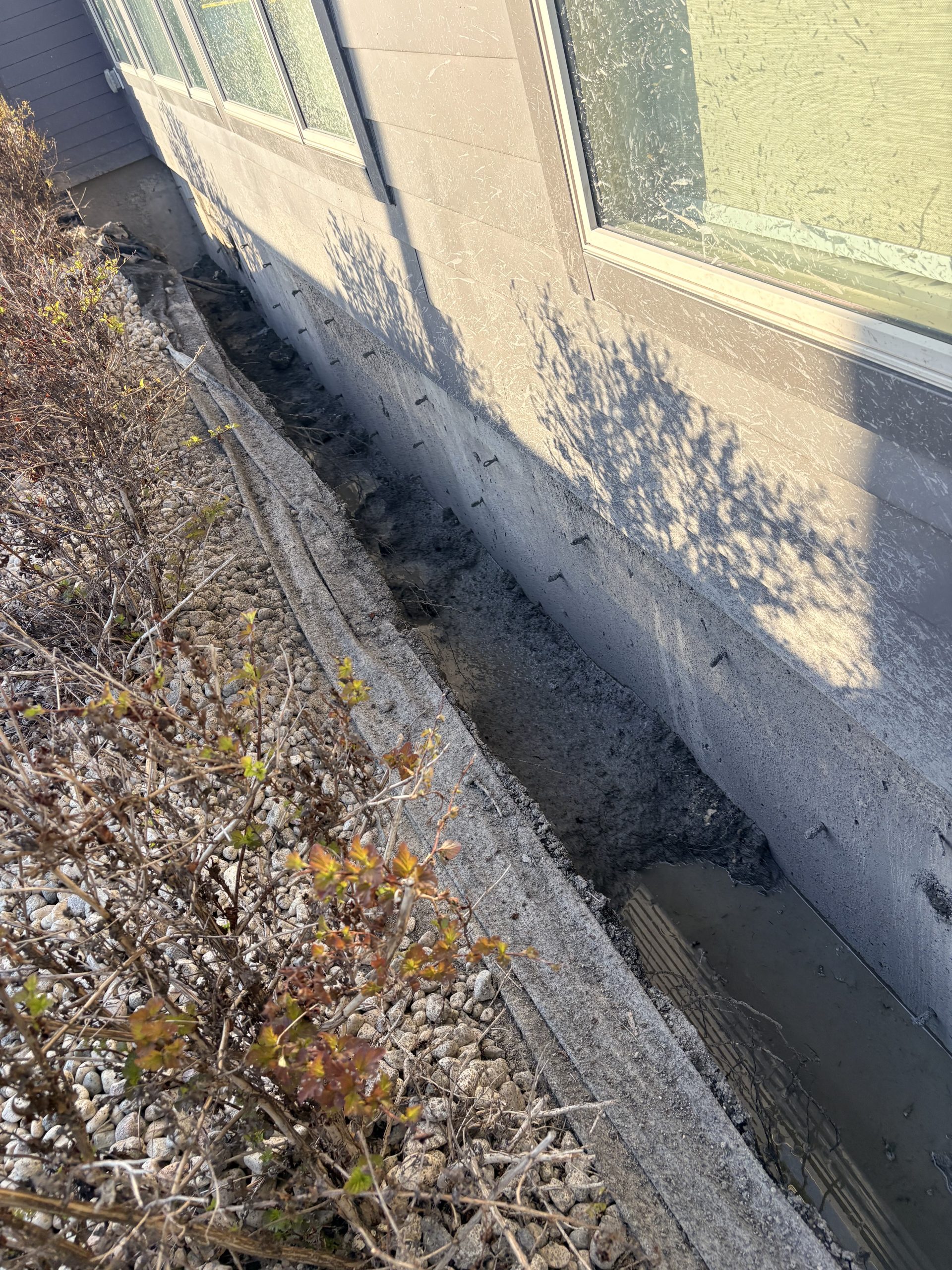
A large three-story retirement condominium complex in Western Canada required extensive corrective work after recurring water and moisture issues developed around the building. A high water table, inadequate grading and site preparation, and several years of heavy rainfall contributed to crawl-space flooding and elevated humidity that was beginning to affect the first-floor living space.
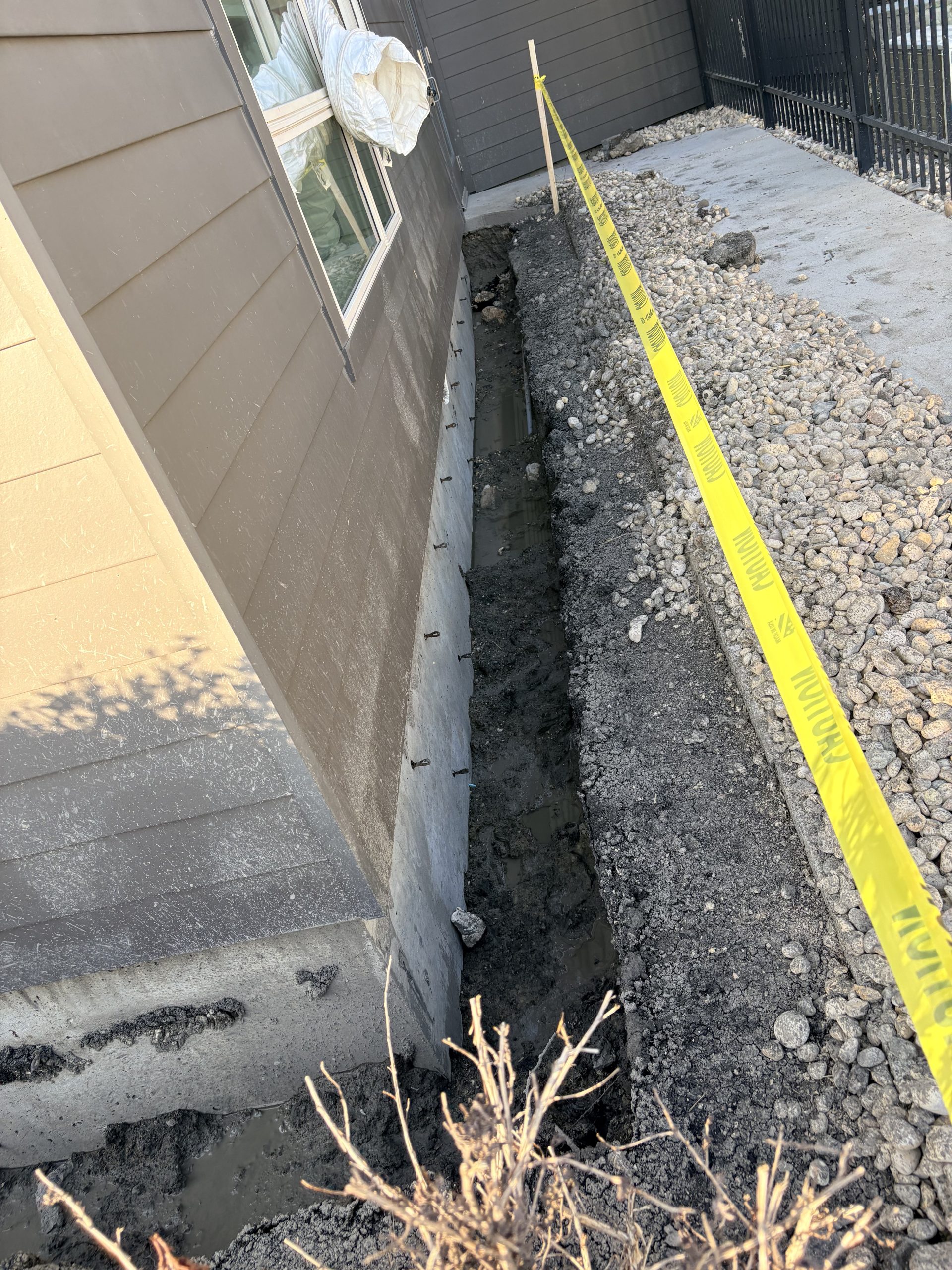
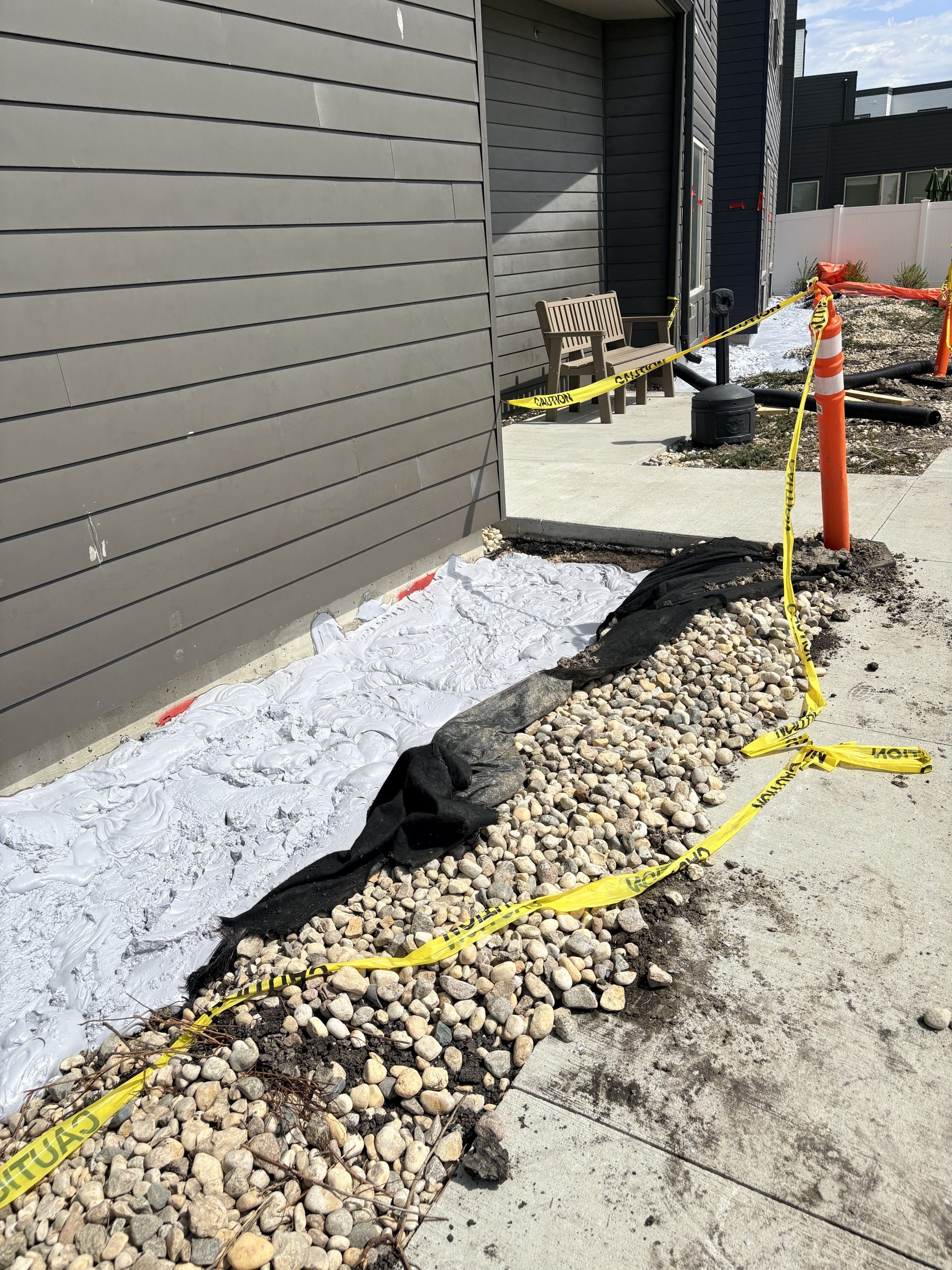
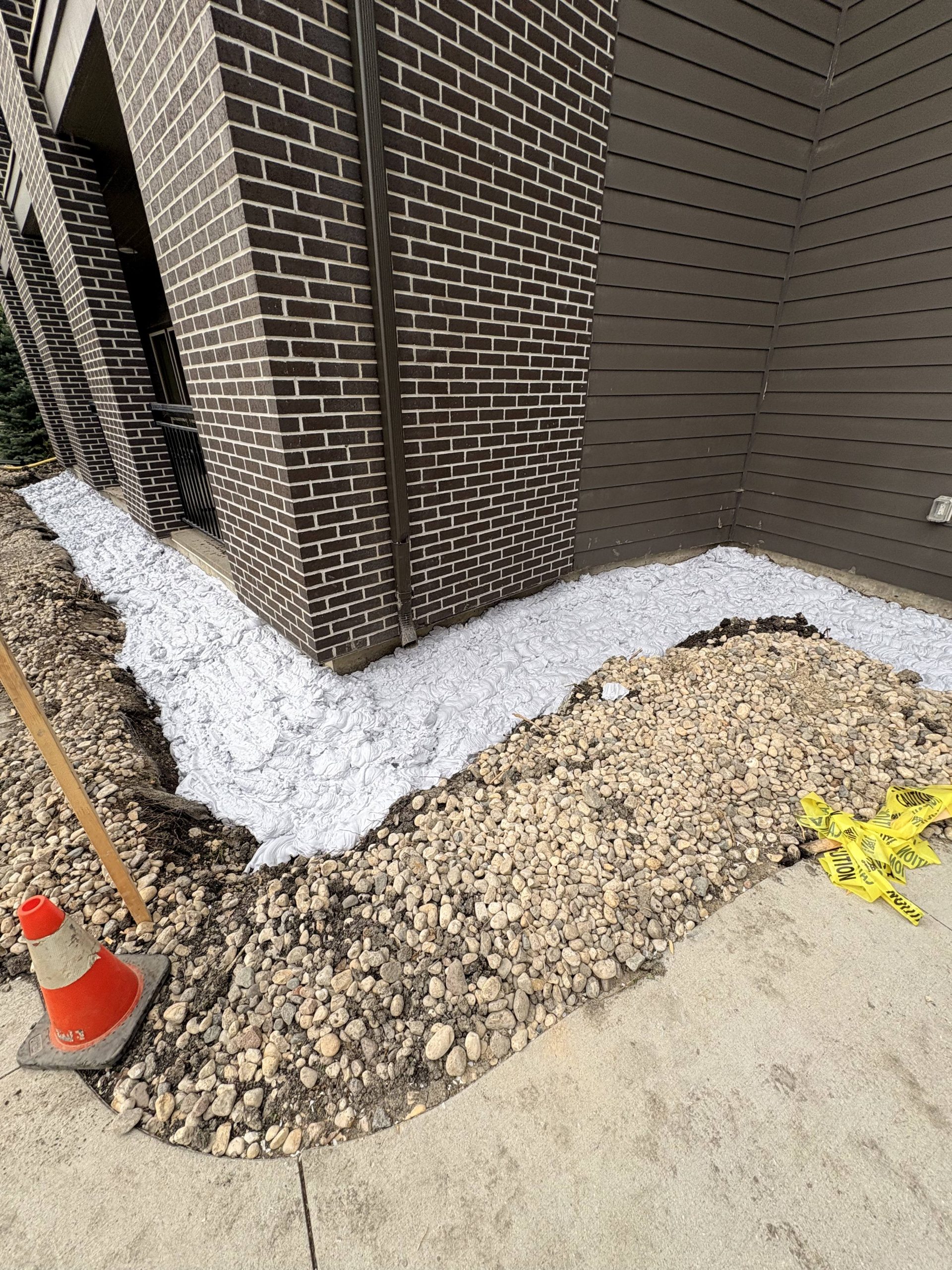
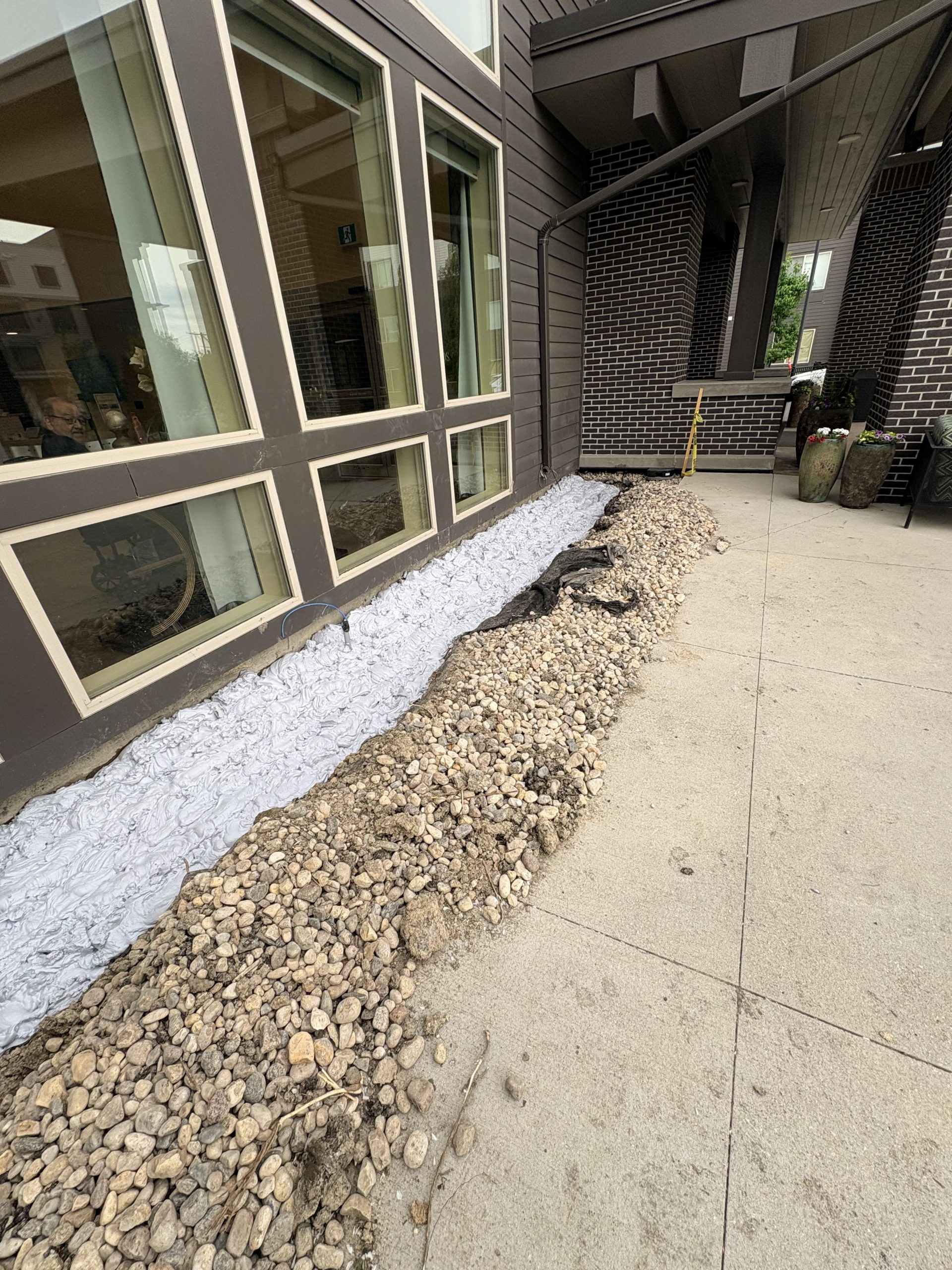
Corrective work required excavation around nearly the entire building. Once the water-management work was completed, approximately 1 kilometer (3,281 ft) of trench needed to be backfilled. The trench was generally 3-4 ft wide and at least 3 ft deep, representing an estimated backfill volume of approximately 1,100-1,460 cubic yards.
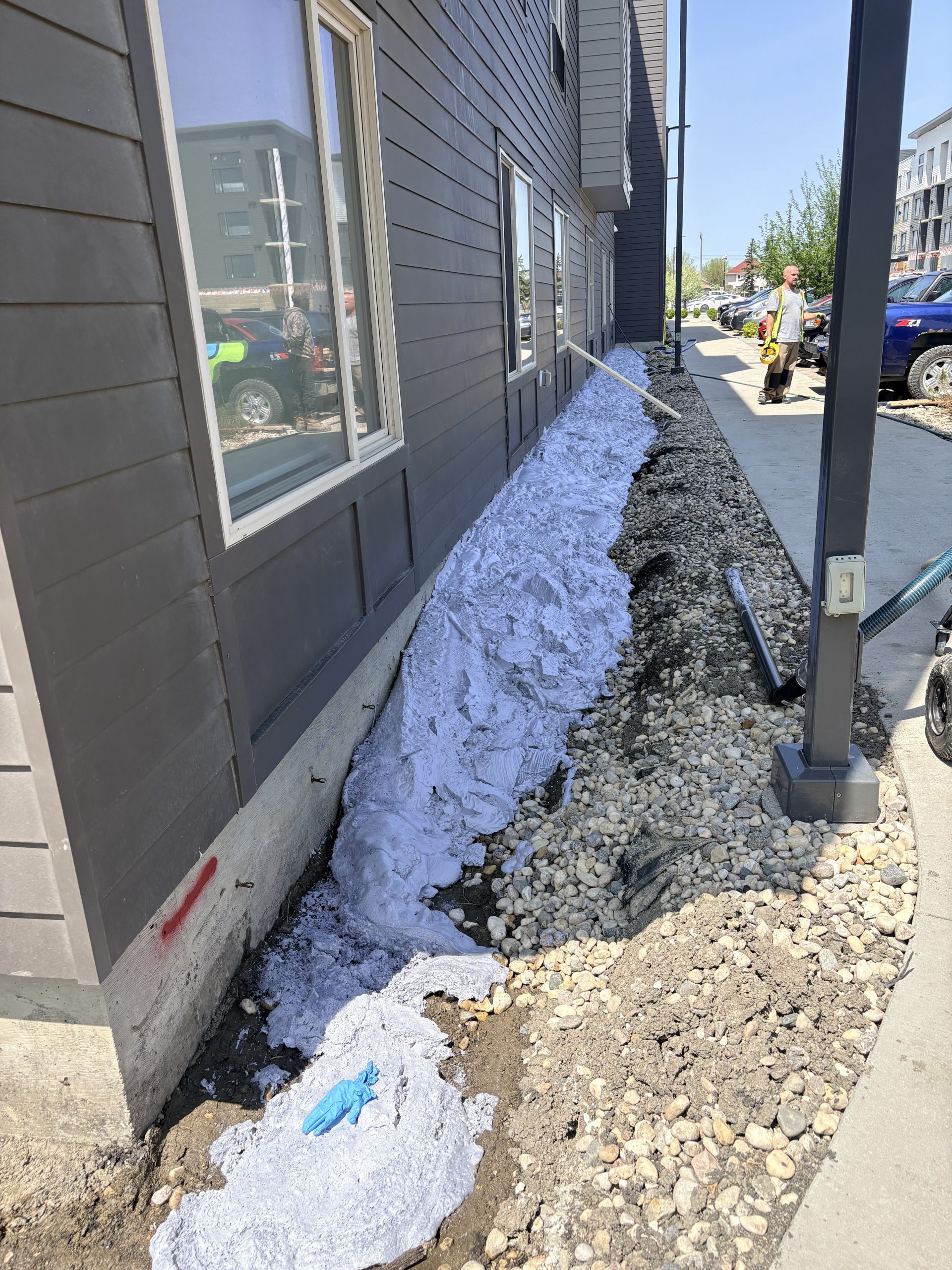
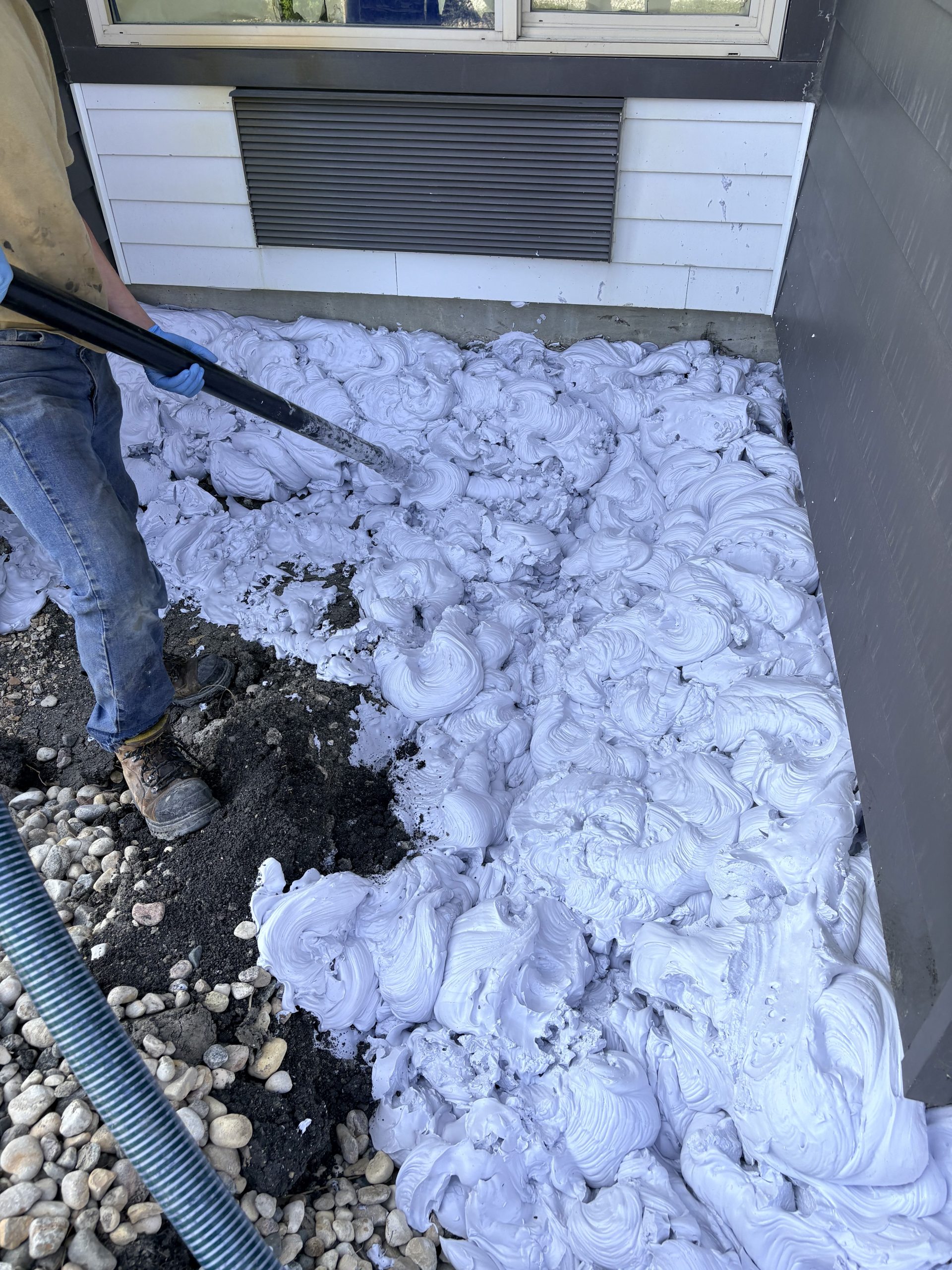
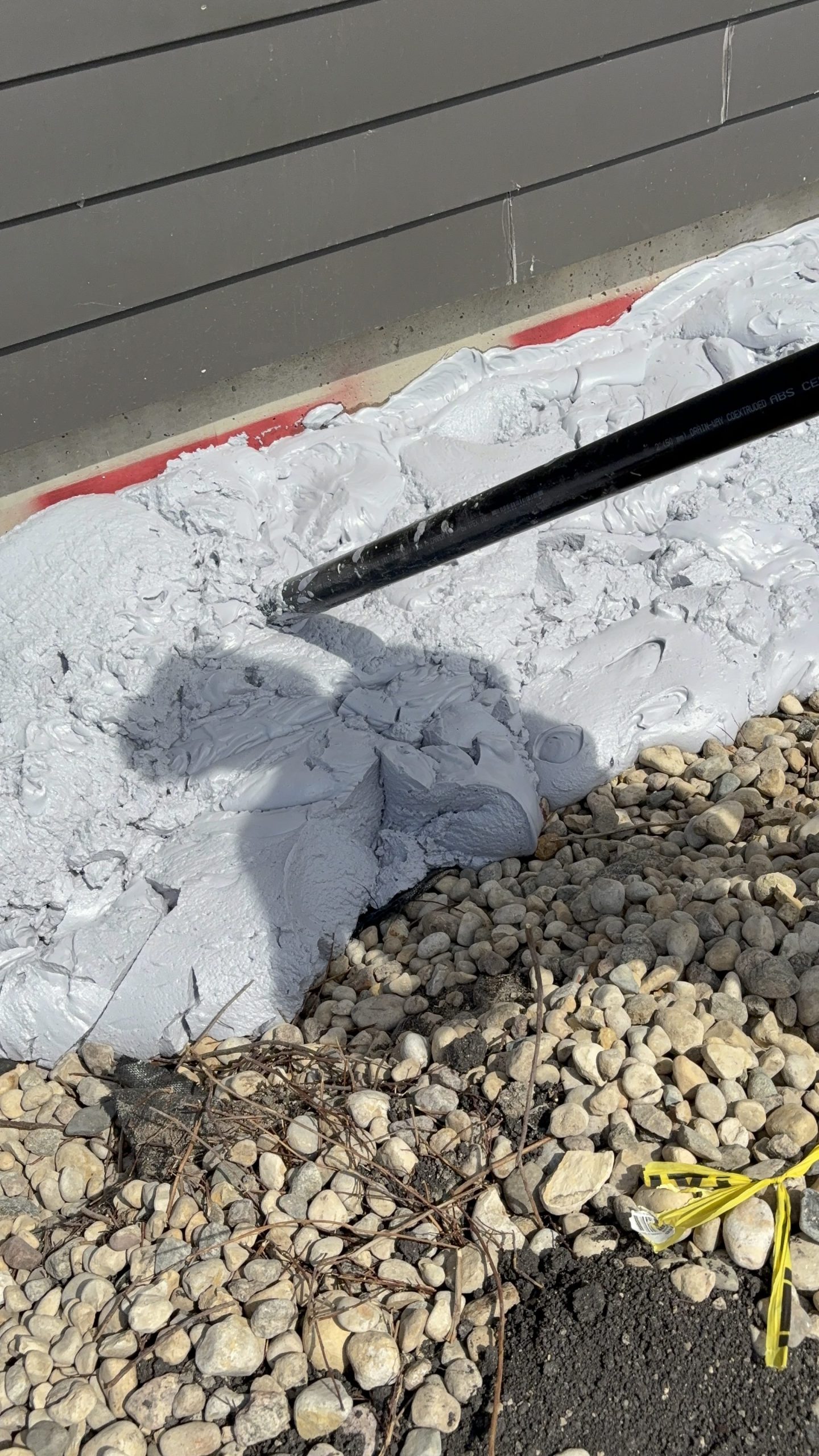
FillFoam was selected as a lightweight, flowable alternative to conventional aggregate backfill. The material could be produced onsite and placed into the excavation without repeatedly moving large quantities of stone through sensitive or restricted portions of the property.
Its placement method allowed the crew to work around sidewalks, landscaping, gated areas, and other active trades while limiting the need for large backfilling equipment. Areas that would have been difficult to reach with excavators or loaders could be filled without creating additional equipment traffic across the site.
A four-person crew completed the backfilling operation in approximately 10 days. Conventional aggregate backfilling was estimated to require approximately four to six weeks. After placement, portions of the FillFoam installation were capped with closed-cell polyurethane as part of the project’s water-mitigation approach.
WHY FILLFOAM™?
This project demonstrates how FillFoam can simplify large-volume backfilling where conventional aggregate placement would require extensive equipment access, material handling, and labor. Its lightweight, flowable formulation can be produced onsite and placed into irregular or difficult-to-access excavations with substantially less site disruption.
For perimeter backfill, utility work, abandonment, large voids, and other applications where access or disruption is a concern, FillFoam provides an alternative to conventional fill materials that can reduce labor, equipment requirements, and overall project duration.
In 2 days, we will teach you what you need to know to successfully tackle soil improvement projects!