
Cookies & Your Privacy
This website uses cookies to ensure you get the best experience on our website. More Information >
Home » Concrete Driveway Repairs
In the realm of concrete driveway repairs, a groundbreaking solution has emerged to redefine the repair process – the use of polyurethane technology by HMI. In this blog post, we delve into the transformative benefits and the step-by-step process of repairing concrete driveways with polyurethane. Discover how this advanced approach enhances efficiency, durability, and overall satisfaction for homeowners seeking lasting solutions to their driveway issues.
This site is protected by reCAPTCHA and the
Google Privacy Policy and Terms of Services apply.
In 2 days, we teach you everything you need to know to start your own concrete raising company!
HMI follows a meticulous process when utilizing polyurethane for concrete driveway repairs. Here are the key steps involved:
Trained professionals assess the condition of the concrete driveway, identifying cracks, voids, and areas requiring repair.
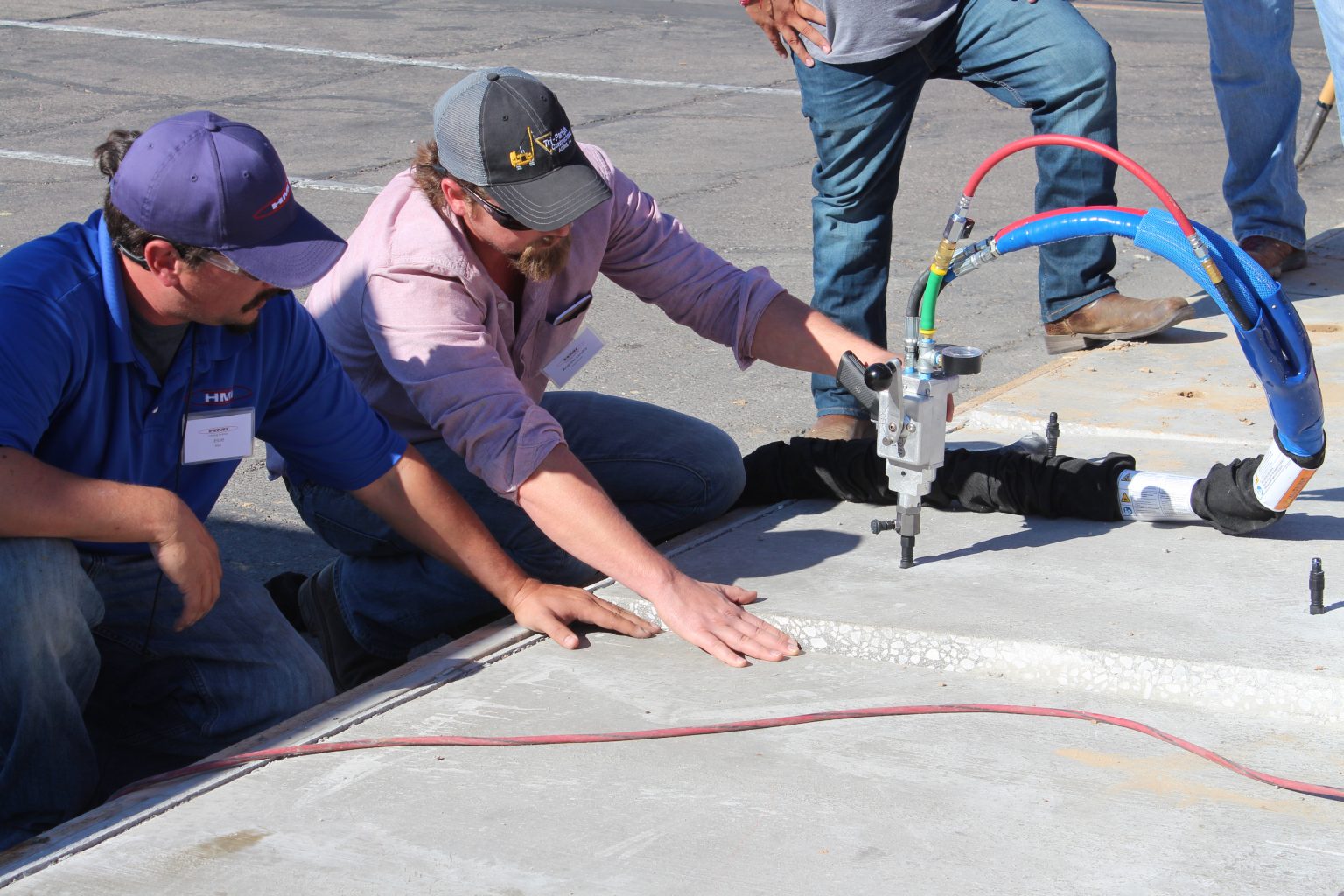
Small access holes are carefully drilled along the damaged areas to facilitate the injection of polyurethane.
Specially formulated polyurethane is injected into the affected areas, effectively filling voids and stabilizing the soil beneath the concrete.
Polyurethane rapidly cures, forming a robust, durable bond within the cracks and voids. Once cured, the access holes are patched, leaving behind a seamlessly repaired concrete surface.
For homeowners seeking effective and lasting solutions to concrete driveway repairs, the integration of polyurethane technology by HMI is the right choice. Embracing this innovative approach promises not only enhanced efficiency but also enduring strength for concrete surfaces, ensuring that driveways remain resilient against the test of time and daily use.
Explore how we’ve transformed similar concrete projects. As we usher in this era of advanced concrete repairs, the future of driveway maintenance shines brighter than ever. Contact HMI today to learn more.
Polyurethane, a versatile polymer celebrated for its exceptional properties, has become a game-changer in the field of concrete driveway repairs. Let’s explore how this advanced material offers a superior alternative to conventional methods, particularly in the context of concrete surfaces.
Traditional concrete repairs often involve disruptive processes, extensive excavation, and prolonged curing times. Polyurethane injections, on the other hand, require minimal disruption. Small access holes are strategically placed, keeping the overall impact on the concrete surface to a minimum.
The high strength-to-weight ratio of polyurethane makes it an ideal choice for concrete driveway repairs. As the injected polyurethane expands and solidifies, it provides a lightweight yet incredibly strong solution. This ensures that the repaired concrete driveway can withstand the weight of vehicles and endure varying weather conditions.
Polyurethane creates a watertight seal upon curing, a crucial feature for concrete surfaces. This waterproofing property not only extends the life of the repair but also safeguards the concrete against water infiltration, preventing potential damage and erosion.
See how polyurethane solved a complex infrastructure challenge.
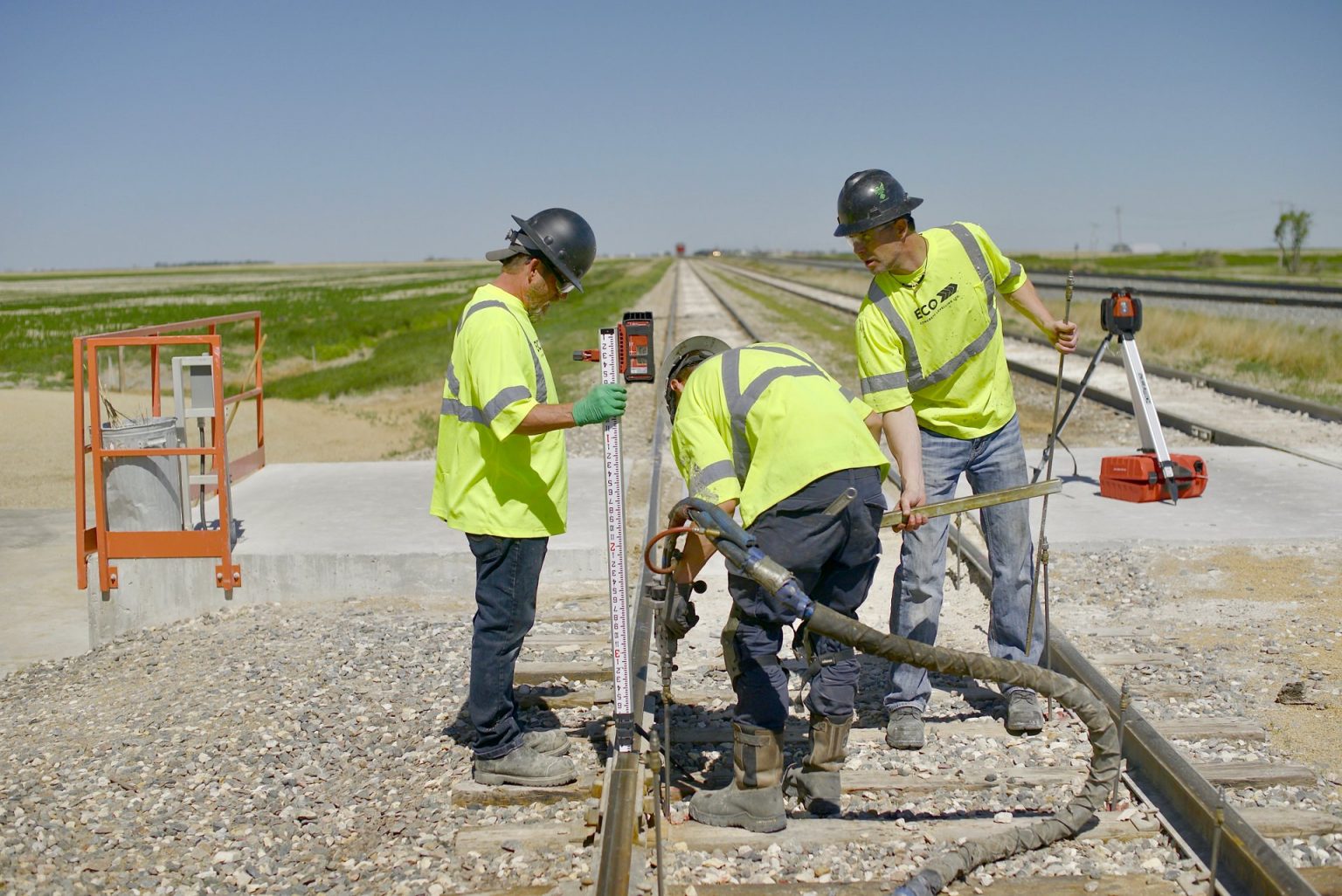
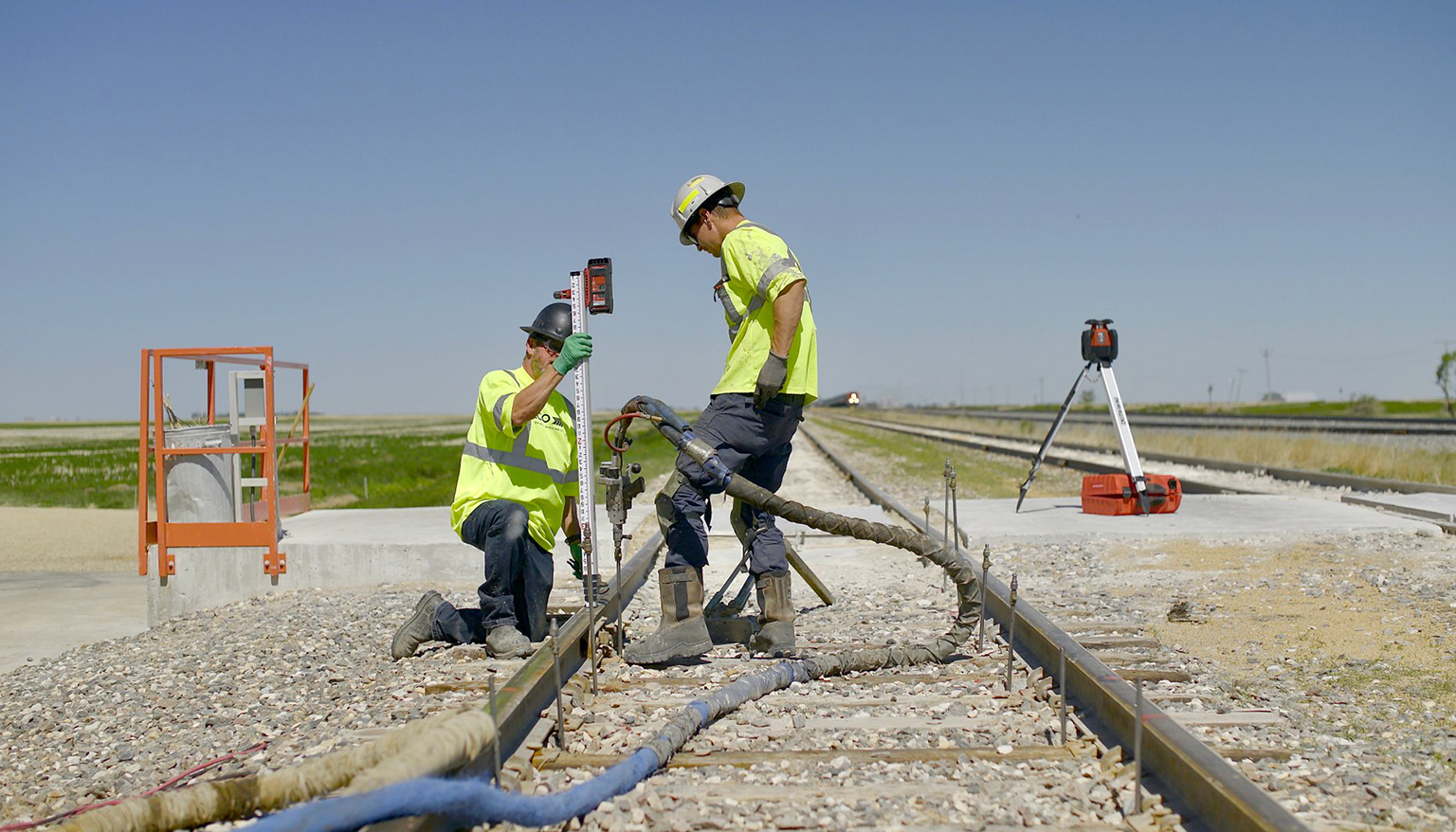
There were approximately 160 feet of rail that needed to be lifted as much as 2”. The concrete lifting contractor used HMI HF402 hydro insensitive foam on this project to raise the track and stabilize the substrate. Besides filling voids and solidifying the loose soil, if there is water present, HF 402 will displace the water and create a stable base for the track to sit on.
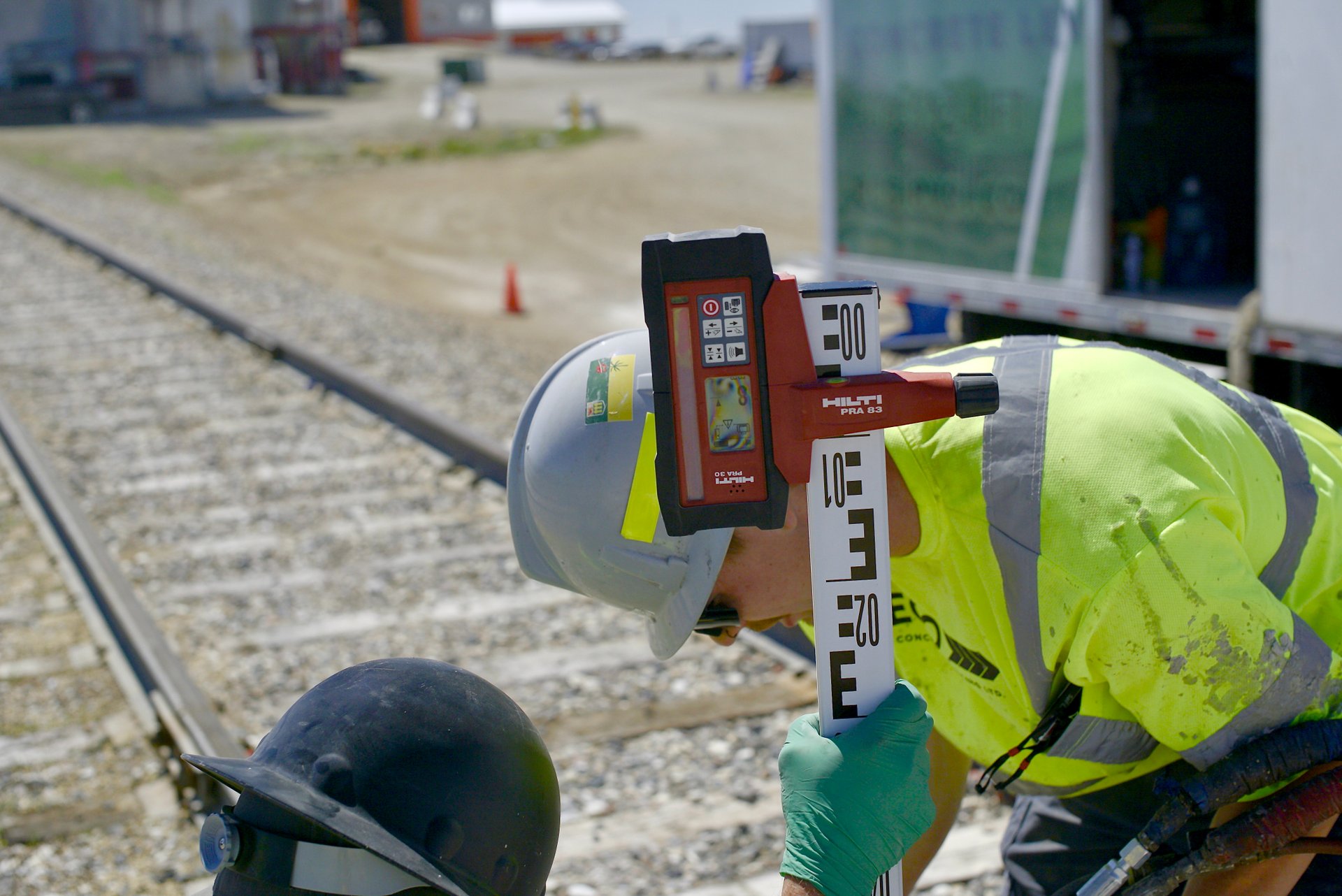
During the process, the rails are monitored closely using a rotary laser level. This monitoring assures that “over lift” does not occur. The contractor completed this in one day, saving the railway company thousands and more importantly avoiding a shut down.
When railroad service roads are used, railway work can be performed up to 250’ away from the Polyurethane system causing minimal interruption to rail traffic. When a train has to pass through the work site the equipment can be removed and the track cleared in under 10 minutes.
When polyurethane systems are in place the work site could be cleared and the systems are mobilized in under 15 minutes.
HMI Polyurethane systems can be equipped with both laser levels as well as water levels allowing for the monitoring of any movement of the rails.
4466 Custer Street
Manitowoc, WI 54220