Your system’s purge methodology matters when stabilizing weak soils with polyurethane foam.
Randy DeCoster
Contractors using dual-component polyurethane foam already know the material matters. But when you move from slab lifting into deeper soil improvement, the purge method matters too.
Deep Foamjection™ is about fixing the issue at its roots: weak soils.
Whether the problem is a sinking structure, settled roadway, bridge approach, seawall, bulkhead, retaining wall, MSE wall, solar piles, structural footing, or industrial floor, the visible movement is often just the symptom. The real problem is usually below the surface: loose soil, poor compaction, voids, erosion, washout, or water movement.
That is where deep polyurethane injection can help stabilize the ground, stiffen weak soils, fill voids, and support controlled lifting.
But not every purge method gives the installer the same level of control.
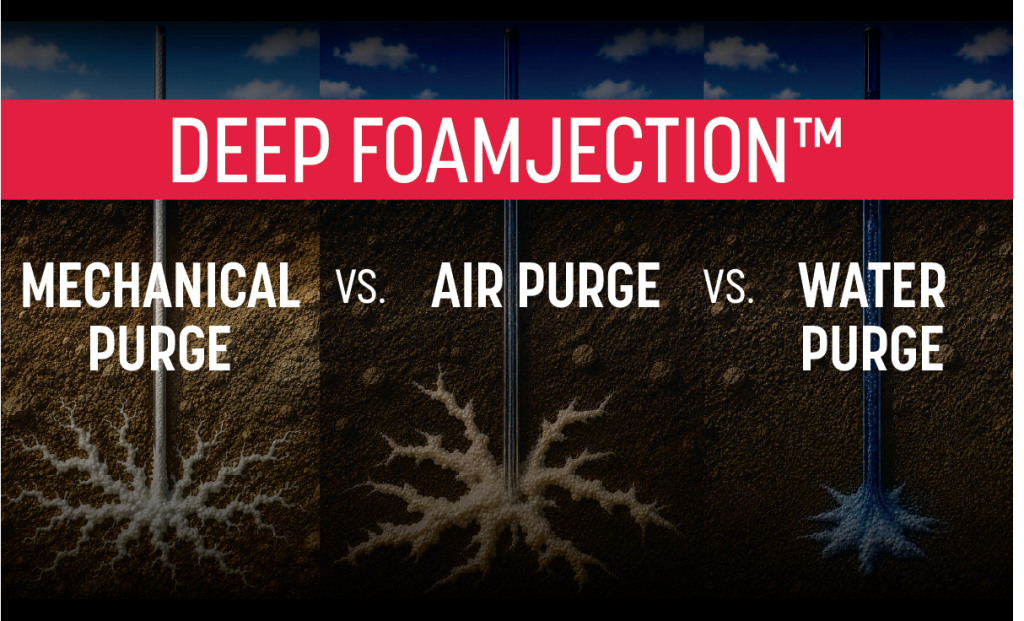
Quick Summary: Air vs. Mechanical vs. Water Purge
Air purge: Gives installers time and control by allowing material to react without clogging the pipe.
- Flexible application: Supports smaller staged injections instead of large concentrated shots, helping create a more uniform soil-grout matrix and adjustments to site soil conditions.
- Controlled lifting: Helps crews stiffen weak soils while adjusting to site conditions and minimizing the risk of overlifting.
Mechanical purge: Less forgiving. If material reacts in the pipe, the pipe may be ruined, adding cost, downtime, and pressure to inject faster than ideal.
Water purge: Can increase pore pressure because water is incompressible, making it harder to place foam in the ground. Air is compressible and dissipates more easily.
Bottom line: Your purge methodology matters. Air purge gives crews more flexibility to stabilize weak soils and adjust to changing site conditions.
Air Purge Gives Installers Time and Control
With air purge, installers get one of the most valuable things on a deep injection job: time.
Air purge allows the polyurethane material to react without immediately clogging the pipe. That gives the crew more control during installation and more flexibility to respond to what the soil and structure is doing.
Instead of being forced into large, concentrated injections, air purge supports the option to conduct smaller, staged injections with just one pipe. Smaller, staged injection, creates a more uniform soil-grout matrix and stiffen the soil while adjusting to site-specific soil conditions. The precision gained through an air purged system helps ensure the foam is going exactly where the operator wants it to go.
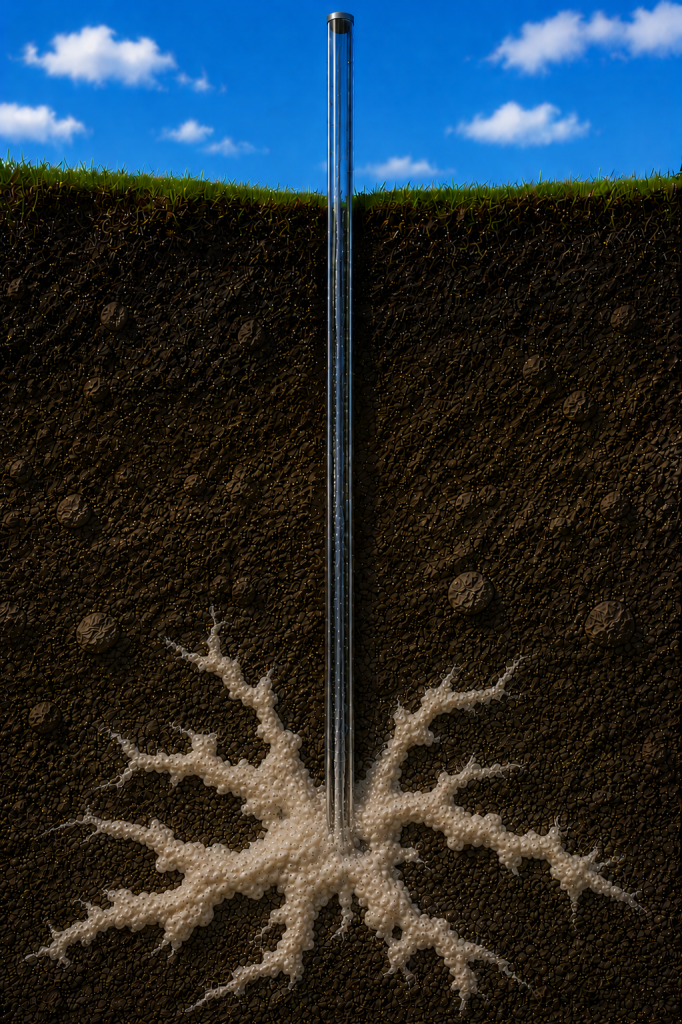
That matters because soils are rarely consistent. One area may have loose granular fill. Another may have saturated material, voids, or tighter soils. Air purge helps the installer adapt the application method to the ground instead of forcing the same approach everywhere.
In addition, air purge supports controlled lifting by giving installers more ability to pause, observe, adjust, and continue the injection process as needed. That can help minimize the risk of overlifting, especially around sensitive structures and infrastructure.
For contractors working near roadways, bridge approaches, seawalls, bulkheads, retaining walls, MSE walls, solar piers, structural footings, or industrial floors, control is not a small detail. It can determine how successful and predictable the repair is.
Mechanical Purge
Mechanical purge can create a “go now or lose the pipe” situation.
If the material reacts in the pipe, the pipe may be ruined. That means expensive pipe loss, downtime, and time spent driving new pipes or installing pipes to each treatment depth.
That urgency can push installers toward faster or larger injections. On deep soil stabilization projects, that can make it harder to control the application method, tailor the injection pattern to changing soil conditions, and minimize the risk of over lifting.
Mechanical purge may still move material through the system, but it gives the installer less room to let the foam react, evaluate the soil response, and adjust the next injection. In deep work, that lack of flexibility can matter.
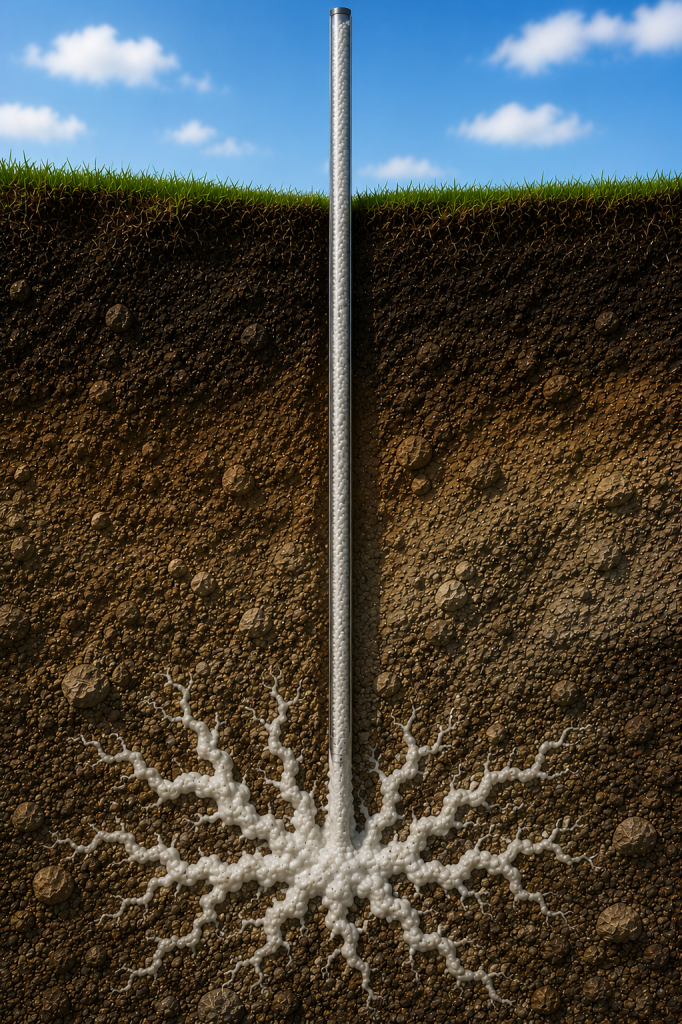
Water Purge
Water purge creates a different challenge.
Water is incompressible. When water is injected into the soil, it can increase pore pressures and make it more difficult to get foam into the ground.
The reactor has to work harder to push that water out of the way before the foam can occupy the target zone. Air is compressible and can dissipate more easily.
In deep polyurethane soil stabilization, the goal is not just getting material out of the pipe. The goal is placing foam in the soil with control.
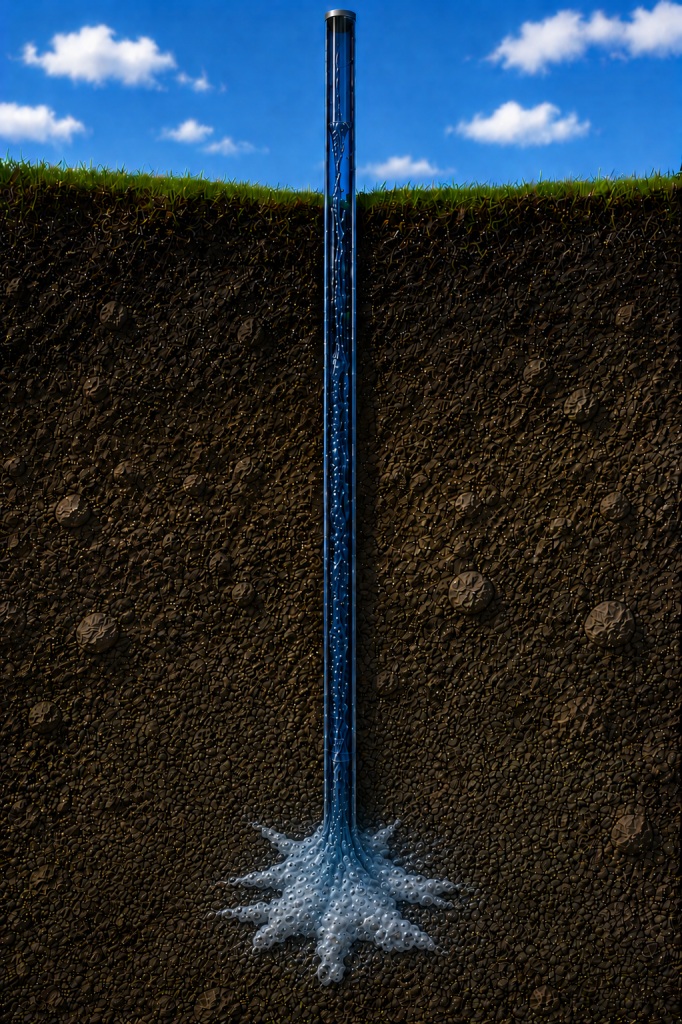
When water is added to soils that may already be wet, loose, eroded, or unstable, the purge method can work against the repair. Air purge gives the installer a cleaner, more controllable way to manage the injection process.
Fix the Issue at Its Roots
Sinking concrete, settled infrastructure, seawall washout, wall movement, solar pier movement, structural footing settlement, and industrial floor settlement often start with the same problem: weak soils.
Deep Foamjection™ with air purge gives installers more time, more flexibility, and more control in the ground.
That means smaller staged injections, a more uniform soil-grout matrix, controlled lifting, and better ability to adjust to site-specific soil conditions.
Your system’s purge methodology matters. Learn more about the EliteOne air purge system here .