
You’ve mastered the drill, pump and patch. Your crew can lift a settled slab without breaking a sweat. But here’s the frustrating part — you’re doing the work correctly and still losing money on the backend. The culprit? Poor estimating.
The key to profitability is mastering the technique and understanding what drives your material costs. A 10×10 driveway in sandy Florida soil requires different material than the same size slab sitting on Missouri clay.
Once you know how to calculate polyurethane concrete lifting yield and account for variables like void size and soil conditions, you can price with confidence. That’s what builds sustainable businesses.
Understanding Key Pricing Terms
To price jobs accurately, you need to know your lift weight from your void volume. Here are the terms that matter:
- Yield: The volume of expanded foam produced by a specific weight of liquid material. Polyurethane foam yield per pound is measured in cubic feet per pound.
- Pounds used: The actual billable unit of material you inject under the slab.
- Lift height: The vertical distance the slab needs to rise — critical for calculating volume requirements.
- Void volume: The empty space under the slab that must be filled before any lifting occurs. The void volume is often your hidden profit killer.
- Injection points: The number of holes drilled, which directly impacts labor time and patch material costs.
- Mobilization: Your fixed cost to get the truck and crew to the site, including fuel, drive time and vehicle wear.
- Minimum job charge: The floor price below which you won’t dispatch a crew. A minimum charge can protect you from losing money on tiny jobs.
What Drives Polyurethane Usage
Two identical driveways rarely cost the same to lift. Understanding polyurethane concrete lifting yield means recognizing what drives material consumption.
Void size makes the difference. A slab with a 2-inch void underneath requires significantly more material than a tight slab, even if both need the same lift height. Sandy or loose soil absorbs more material than hard-packed clay, reducing your yield efficiency. Heavier commercial slabs require denser foam formulations to support the weight, which means more pounds per cubic foot.
Equipment matters too. Modern injection guns like the EliteONE Air Purge Gun minimize waste and downtime compared to older systems. The air purge feature keeps ports open and lets you work at your own pace and return to previous injection points without redrilling.
The golden rule? Measure, probe your injection holes and document conditions before you finalize the quote.
The Three-Part Pricing Framework
Profitable polyjacking pricing follows a three-part model that covers all your costs and protects your margins.
First, establish a mobilization fee. This fee covers the cost to show up — fuel, drive time, crew wages and equipment wear. Without this floor, a $300 sidewalk repair can actually cost you money.
Second, calculate your variable material charge. You can bill per pound for transparency on commercial jobs or use a flat rate based on estimated pounds for residential work. Always include a buffer for material overage. The industry rule of thumb breaks down as one-third material, one-third overhead and one-third profit. For more detailed calculations, take a look at the “KISS” Profitability Calculation.
Third, account for labor and overhead. Bundle these into your per-pound retail price on residential quotes to keep things simple for customers.
Calculating Your True Material Cost
Your concrete lifting pricing per pound starts with knowing the true cost of goods sold. Take your material cost, add freight shipping and sales tax, then divide by total pounds. That’s your baseline.
Add a 5% to 10% waste factor for purging lines, test shots and inevitable spills. Calculate your labor costs by multiplying your hourly crew rate by the hours on-site, including drive time. Include a small daily factor for equipment amortization — your rig experiences wear and tear on every job.
Using a Pricing Calculator
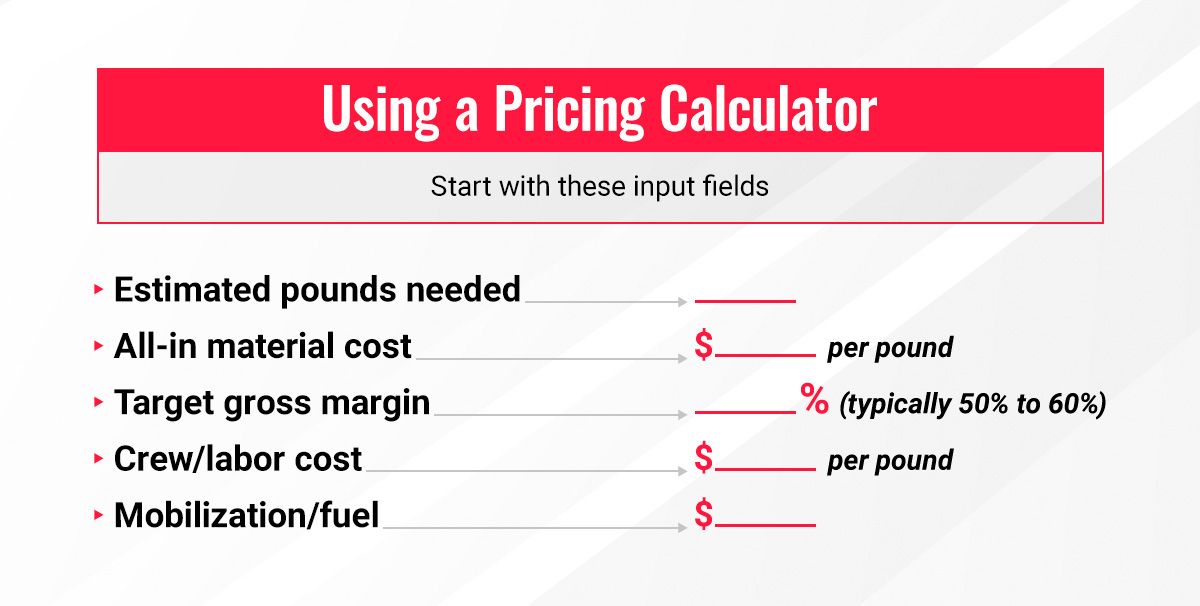
A concrete leveling estimate calculator transforms your bidding process. Start with these input fields:
- Estimated pounds needed: ___
- All-in material cost: $___ per pound
- Target gross margin: ___% (typically 50% to 60%)
- Crew/labor cost: $___ per hour
- Mobilization/fuel: $___
Your formulas calculate automatically. Base cost equals pounds times cost plus labor plus mobilization — this gives you your break-even price or floor. From there, divide your base cost by one minus your target margin percentage to get your recommended price. The difference between these two numbers shows your estimated profit.
Many contractors save time by building a standardized concrete lifting quote template with these formulas already built in.
Real-World Job Scenarios
Seeing the pricing framework in action helps you apply it to your own work. Three common scenarios illustrate how different job types require different pricing approaches. Each one shows where your minimum charge, per-pound pricing or material-plus-mobilization model makes the most sense:
- Small residential sidewalk: These jobs are where low material usage meets high travel time. Base your minimum job charge on the per-day rather than per-pound math to keep you from losing money on quick fixes far from your shop.
- Standard driveway panel lift: These jobs generally have moderate voids and straightforward lifting conditions. Price them using estimated pounds multiplied by your retail rate. These jobs usually represent your bread-and-butter residential work, where concrete-lifting profit margin targets hold steady.
- Commercial or municipal slab: This often represents high liability, specific density requirements and night work. You may need additional insurance and bonding. Use a per-pound contract in which the customer pays for the actual material used, plus mobilization. If the job requires additional warranties or administrative loads, increase your price accordingly. Choose the right foam density for heavy loads to maximize productivity and profitability.
Presenting Your Price With Confidence
When you present your polyjacking cost per square foot or per pound pricing, help customers understand the value they’re getting.
Speed is a major advantage. Customers can use their driveway immediately instead of waiting days for new concrete to cure. Aesthetics matter too — you’re leveling existing concrete, not creating a bright white replacement patch. And the savings speak for themselves — concrete leveling typically costs 50%-70% less than full replacement.
Your quote should outline the scope of work, warranty terms and any exclusions, such as if crack filling is not included. Transparency helps customers understand what they’re paying for and sets expectations, especially regarding warranties and underlying issues like drainage that may need separate attention.
Protecting Your Profit Margins
Learning how to price concrete leveling jobs means protecting your margins at every stage. Accurate measurements preserve your bottom line. Always probe to determine the actual void size rather than estimate visually — this ensures your material calculations reflect the true scope of work.
Factor in your full costs from the start. Account for mobilization expenses, like drive time and fuel, and honor your minimum job charge. These boundaries ensure every job contributes to your business rather than draining resources.
Build value before discussing price. When customers understand what you’re delivering — speed, aesthetics and long-term performance — your pricing makes sense in context.
Finally, address root causes for lasting results. When you identify drainage or soil stability issues, recommend solving them before lifting. This advice helps protect your warranty and your reputation, ensuring the work performs as promised without costly callbacks.
Why Trust Us
At HMI, we’ve built our business around contractors helping contractors succeed. We’ve trained thousands of operators through our hands-on seminars, and we stay with you long after you leave our facility. Our team provides ongoing support for everything from job estimates to troubleshooting equipment in the field because we understand the real challenges you face on every job.
We developed the patented EliteONE Air Purge Gun and offer renewable-based foam options that give you a competitive edge. We’ve helped contractors across the country build profitable businesses by mastering accurate estimating, efficient operations and sustainable pricing.
Turn Knowledge Into Profit
Make sure your pricing reflects the true value you deliver. When you understand polyurethane injection job costing, you can bid with confidence and keep building a sustainable and profitable business.
You don’t have to figure this out alone. Join us at our next 2-Day Discovery and Training seminar. We’ll teach you hands-on techniques for estimating, lifting and running a profitable concrete raising operation. You’ll work with actual equipment, meet the HMI team and leave with a complete business roadmap made for your goals.
Contact a specialist at 888-793-9484 to discuss the right startup package for your market. We’re here to support you every step of the way.
Visit our training and support page to see upcoming seminar dates, or explore how to start a polyurethane concrete raising business with the right equipment package.