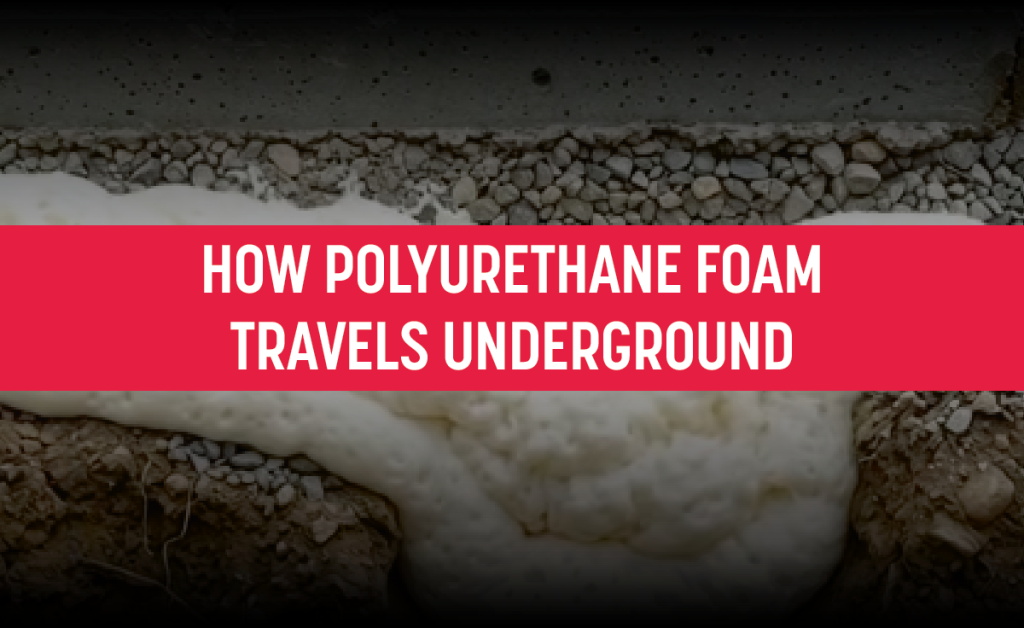
Once polyurethane is injected beneath a slab, its path is influenced by the conditions already present underground. Contractors may know where the material enters, but they cannot see every route it takes after that.
That is why two injection points on the same project can behave very differently. One may produce lift quickly, while another seems to consume material with very little movement. The difference is often what the foam encounters beneath the concrete.
Voids Are Rarely Perfectly Uniform
The space beneath a settled slab is usually more complicated than a clean, even gap. Some areas may have a shallow void directly beneath the concrete, while others may contain deeper washouts, loose aggregate, disturbed soil, or pockets created by erosion. Polyurethane can move into any of those available spaces.
As a result, the visible amount of settlement does not always tell you how much space exists underneath. Two slabs that have settled the same amount can require very different amounts of material because the subsurface conditions are different. This is one reason material usage can sometimes surprise even an experienced contractor.
Cracks, Joints, and Open Edges Can Create Unexpected Paths
Polyurethane can also find routes that are not obvious from the surface. Cracks in the base, open slab edges, expansion joints, utility trenches, drainage features, and other openings may provide easier pathways for the material to travel. If one of those paths offers less resistance than the area directly beneath the slab, some of the foam may move in that direction.
For contractors, this makes site awareness important. Knowing what is around the treatment area can help identify places where material could potentially travel before injection begins. That becomes especially important near foundations, drains, landscaping, open edges, or other areas where foam showing up unexpectedly could create problems.
Loose Base Changes How the Foam Behaves
Not every project involves a clearly defined void. Sometimes the material directly beneath the slab has become loose or poorly consolidated. In those conditions, polyurethane may work its way into spaces within the base rather than simply spreading across an open gap.
This can make an injection consume more material before the slab begins to respond. The foam may be occupying open spaces within the disturbed material and increasing support beneath the slab before enough resistance develops to produce noticeable movement. A contractor may see little initial lift even though the material is still doing useful work beneath the concrete.
The Slab Gives You Clues
Because the work is happening out of sight, contractors have to use the information available at the surface. How quickly the slab responds, how much material is being used, how neighboring areas move, and what happens at nearby joints or cracks can all provide clues about what may be happening underground.
Those clues are not a perfect picture of the subsurface, but they help the contractor decide whether to continue at the same injection point, move to another location, adjust the injection pattern, or change the amount being injected. That field judgment is a major part of successful polyurethane lifting.
The Bottom Line
Polyurethane does not encounter the same underground conditions on every job. Voids, washouts, cracks, loose base material, slab edges, and other subsurface features can all influence where the material travels and how much foam a project requires.
The important lesson for contractors is not that foam follows one predictable path. It is that subsurface conditions control the available paths, and the slab’s response helps provide clues about what is happening below. Understanding those conditions makes it easier to adjust the injection strategy as the job develops.
Stay Tuned
In the next Foam Fundamentals article, “What Is Undersealing?”, we’ll look at why lifting the slab to the correct elevation is only part of the job and how polyurethane can be used to create broader support beneath the concrete. Check it out here.
This is blog #8, check out our other blogs in the foam fundamentals series here:
- Blog #1: What does 2 lb Polyurethane Foam Actually Mean?
- Blog #2: Why are there Different Polyurethane Foam Densities?
- Blog #3: What is Polyurethane Foam Expansion?
- Blog #4: Why More Expansion Isn’t Always Better
- Blog #5: Reaction Speed vs. Spread
- Blog #6: Why Faster isn’t Always better in Polyurethane Concrete Lifting
- Blog #7: What Actually Lifts Concrete